BBD #10 : Simple Milk Loaf

Rough night last night. Sat through the whole of the final for the 2008 Eurovision Song Contest. Phew. I mean, what’s with the ice-skater, the man with the unbuttoned shirt and the guy playing the violin, on his knees? Commiserations to B for Ireland’s top drawer entry by Dustin the Turkey, not even making it in to the final. Ireland was surely robbed!

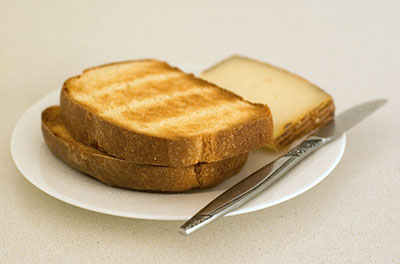
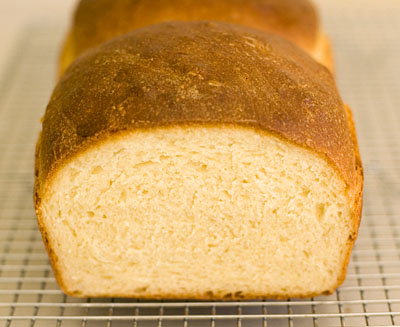
Now all I need is something soothing to help me start the day. A slice or two of a simple milk loaf, toasted. A wedge of Manchego from La Mancha in Spain. A cup of tea. The simple things in life paving the way for what looks like the beginnings of a very good day.

This milk loaf is my contribution to BBD #10, hosted by Melissa of Baking A Sweet Life. The theme she has chosen is Breakfast Breads.

Simple Milk Loaf :
(from The Art of Handmade Bread by Dan Lepard)

1 1/2 teaspoon fresh yeast, crumbled
350g whole milk at 20’C
1 tablespoon corn or maple syrup
250g plain flour
250g bread flour
1 1/4 teaspoon fine sea salt
2 tablespoons warm melted unsalted butter

In a large bowl, beat the yeast with the milk and syrup. Add the flours and the salt, and squidge the lot together with your hands until you have a soft, sticky dough and the flour and liquid have evenly combined. Pour over the warm melted butter, and then squeeze this into the dough. Scrape any remaining dough from your hands, cover the bowl and leave for 10 minutes. Rub 1 teaspoon of olive oil or corn oil on the work-surface and knead the dough for 10 seconds, ending with the dough in a smooth round ball. Wipe the bowl clean and rub with 1 teaspoon olive oil, return the dough to it, cover and leave for an additional 10 minutes. Repeat this light kneading twice more, at 10 minute intervals, then leave the dough for 30 minutes.

Grease and flour a deep loaf pan. Divide the dough into two equal pieces and shape each into a ball. Drop them side-by -side into the prepared pan, cover with a cloth, and allow to rise for 1 1/2 hours, or until almost doubled in height.

Preheat the oven to 210’C. Brush the top of the loaf with a little cream or milk, and bake for 15 minutes, then lower the heat to 176’C and bake for an additional 25-30 minutes, or until the top of the loaf is a shiny dark brown, and the loaf has come away from the sides of the pan. Remove from the pan, and allow to cool on a wire rack.

Comments (9)

WHB : Silverbeet Gratin

About two weeks ago, I was reading Steve Manfredi’s Seasonal Cook column in the weekend paper when a thought struck me. The featured ingredient was cavolo nero, that wonderful deeply green cabbage originally from Tuscany. One of Steve’s recipes was for his version of cavolo nero gratin. The gratin sounded very familiar, and even more familiar was the name of the chef he credited the recipe to, Cameron Cansdell. My weekend brain took awhile to finally click that they seemed so familiar because I used to work with Cameron at the bistro, and that a similar gratin had been on the bistro’s menu.

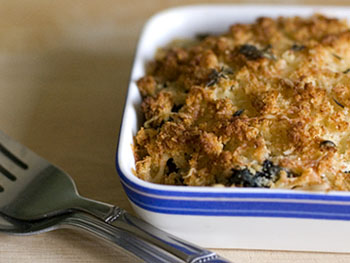
Memories of my time working at the bistro came flooding back, as did the taste of that amazing gratin which if I remember correctly, used to be served with panfried duck breast and confit duck leg. The gratins used to be made in elongated metal tins, and portions were scooped out as required. I could still remember how gloriously crunchy the golden crust was, and how naturally sweet and yielding the vegetables that lay underneath were. Ah, I just had to try the gratin again!

As it is difficult to find ingredients like cavolo nero near where I live, I used silverbeet instead. Silverbeet, also known as Swiss Chard or Perpetual Spinach, is a leafy vegetable that is part of the beet family and is popular in Mediterranean cooking. Regardless of whether you settle on using cavolo or silverbeet, the method for preparing this gratin remains the same, and trust me, the end result will make you glad that you gave this tasty recipe a go!

Silverbeet gratin is my contribution to this week’s WHB, hosted by Cate of Sweetnicks.

Cavolo Nero Gratin :
(serves 6; from Steve Manfredi’s Seasonal Cook column)

4 bunches cavolo nero, each about 150g
1 cup breadcrumbs, not too fine
100g melting cheese such as gruyere or fontina
1/2 cup grated parmesan
50g butter
3 tablespoons extra virgin olive oil
1 large brown onion, finely chopped
2 cloves garlic, minced
100ml cream
salt and freshly ground black pepper

Fill a large saucepan with water and bring to boil. Strip leaves from cavolo nero, discarding stems. Simmer leaves in the boiling, salted water for 3 minutes. Drain well, pushing residual water from leaves with the back of a ladle.

Preheat oven to 200’C. In a bowl combine breadcrumbs and the two cheeses [You can also add some freshly chopped herbs to this breadcrumb mixture if you wish. I included some thyme in mine].

Place a pan over medium heat, add butter and oil and, when they begin to sizzle, add onion. Lightly fry for 3-4 minutes until transparent. Add garlic and saute for another minute. Coarsely chop cavolo and add to onions and garlic. Saute for 2 minutes, then add cream. Turn heat to high to evaporate liquid until there is just enough cream to coat the cavolo. Season to taste, then remove from pan and spoon mixture into a gratin dish or ovenproof fry pan where the mixture will fit snugly and is 3-4 cm deep. Spread breadcrumb mixture over top of gratin and bake in oven for 20 minutes until golden brown.

Serve hot by itself or as an accompaniment to roast beef or pork.

Comments (3)

Din Tai Fung – World Square

My dad is of the opinion that there are two types of Chinese people in the world. Those who like noodles and dumplings, and those who prefer rice. My dad loves noodles – he grew up on noodles that his mom, my grandmother, hand-made on a regular basis. As he comes from a very big family, I can imagine the task of making enough noodles to feed everyone, would have been enormous indeed. Hence it was also a big treat for us kids to have these noodles, whenever my grandmother sent us some as a gift.

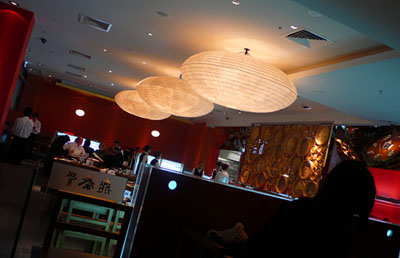
I must confess, I am a rice eater. I can eat almost anything with rice, even spaghetti sauce, no matter how incongruous the two may seem. So it wasn’t really the news about a world famous dumpling chain finally opening in Sydney that caught my eye. Rather, it was Lorraine’s enthusiastic post about her visit to Din Tai Fung, that made me want to check the place out as well. Din Tai Fung has the honour of being rated one of the top 10 restaurants in the world by the New York Times. However, as a friend cautioned, this accolade was bestowed in 1993, and a lot can happen in the intervening time. Standards can slip, etc etc.

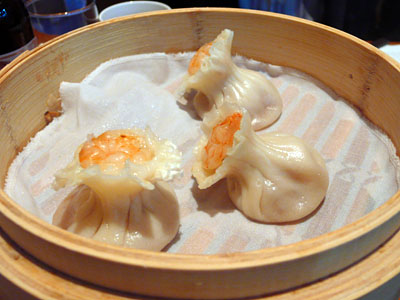
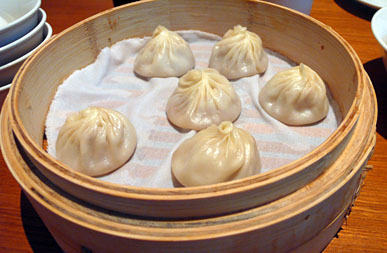
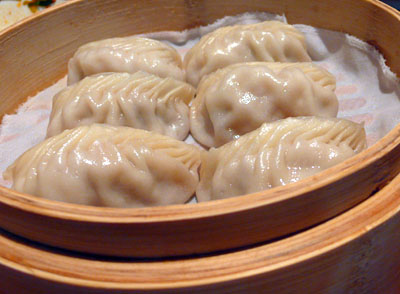
Luckily, this doesn’t turn out to be the case. While the spicy dumplings that we first order are a bit too oily for me, it is the soup dumplings (which Din Tai Fung are famous for), that truly seal the deal. With the soy sauce and slivers of ginger (the recommended accompaniments, which you really need to bring out the flavours of the dumpling), and the little laminated card in English, showing you the correct way to eat soup dumplings, every mouthful was a stomach-pleasing revelation. The dumpling dough was just the right thickness – thin enough, to not be pasty and gluey, and just thick enough to not break and spill it’s liquid contents before it hits your mouth. I’d happily fill up on soup dumplings alone, even if it’s just pork dumplings, or variations on the theme of pork dumplings. B and Calamari finish their meal with bowls of dumplings and noodles in soup which with the help of most of the condiments on the table (chilli oil, black vinegar and soy) renders the dish worthy of a big thumbs up.

A few quibbles I have with the place. While the service was friendly, I found it a touch too obsequious. Even though it’s early days for this branch of the famous chain (it’s only a few weeks young, afterall), I was also disappointed to see a lot of “Not Available” stickers next to quite a few menu items (mostly vegetarian dishes, as well as a few “special” items like a crab and pork dumpling).

That said, I’m looking forward to returning. With all those lovely soup dumplings waiting to be slurped up, it’s like having Yum Cha in the evening. What’s not to like about that?

Din Tai Fung
Shop 11. 04 Level 1
World Square Shopping Centre
644 George St
Sydney 2000.

Comments (10)

« Previous Page · Next Page »